Sir Charles Warren and the architecture of Masonic Inquiry
Archaeologist, soldier, scholar, Warren’s Masonic legacy lies less in office than his methods for understanding its history
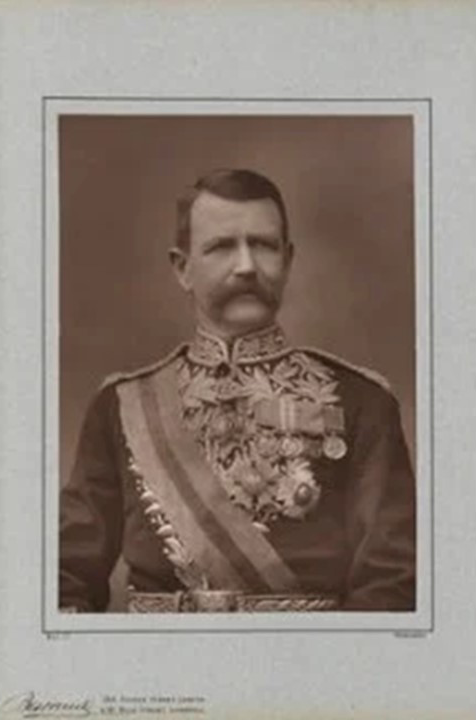 Sir Charles Warren is often remembered for the prominence of his Victorian career: senior army officer, Metropolitan Police Commissioner, and a figure shaped by the pressures of empire. Yet his most durable influence emerged not from authority, but from approach. Across archaeology, military service and Freemasonry alike, he was marked by a quiet insistence on structure, evidence and disciplined inquiry.
Born in 1840 and trained at the Royal Military Academy, Woolwich, Warren absorbed a professional culture that prized measurement, verification and endurance. These habits became the tools with which he navigated every field he entered. In an age that often-romanticised discovery, he resisted conjecture unsupported by fact.
That temperament was most clearly demonstrated in Jerusalem during his work for the Palestine Exploration Fund in the late 1860s. In hazardous conditions, Warren pioneered systematic surveying, sinking shafts and tracing ancient water systems with painstaking accuracy. His aim was not spectacle but understanding. By prioritising method over myth, he helped establish archaeology as a discipline grounded in reproducible evidence rather than assumption or antiquarian enthusiasm.
The same character followed him into public office. His tenure as Commissioner of the Metropolitan Police was marked by controversy, notably Bloody Sunday in 1887 and the Whitechapel murders in 1888. His preference for clear chains of command and principled consistency proved less suited to the political sensitivities of a restless capital. Yet even in adversity, he remained guided by internal standards rather than expedience.
It was within Freemasonry that Warren found a setting where method itself could be the achievement. In 1884, as Founding Worshipful Master of Quatuor Coronati Lodge No. 2076 under the United Grand Lodge of England, he helped establish a new model for Masonic study. At a time when much Masonic history relied upon repetition of legend, Warren did not seek to diminish symbolism but to strengthen it through evidence. Under his guidance, the Lodge embraced critical use of primary sources, open scholarly debate and the publication of research through Ars Quatuor Coronatorum*. The process itself was the innovation.
 For the Province of Essex, this legacy is not merely historical but living. The Province enjoys a close and longstanding relationship with Quatuor Coronati Lodge, and a select number of Essex Brethren, past and present, have been counted among its members. This includes the late Peter Holland, Deputy Provincial Grand Master, whose commitment to thoughtful scholarship reflected the very standards Warren championed, and today that connection continues through Gerald Reilly+. These links quietly affirm that disciplined inquiry remains active within our own Masonic community.
Warren’s enduring contribution lies not in any single conclusion, but in embedding rigorous inquiry into the fabric of Masonic study. He demonstrated that tradition is strengthened, not diminished, when built on firm foundations.
‘*’ Ars Quatuor Coronatorum is the annual transactions and academic journal of the Quatuor Coronati Lodge No. 2076 the premier lodge of Masonic research in London
‘+’ Gerald Reilly – Masonic researcher, author and winner of the Norman B Spencer Prize 2016 Norman B Spencer Prize
Photos:
Top: Sir Charles Warren by Herbert Rose Barraud – Courtesy of the National Portrait Gallery
Below: Symbol of Quatuor Coronati Lodge