The King and the Craft: a tale of two July 1776s
News stories bringing the history of Essex Freemasonry alive to a modern audience
In July 1776, King George III looked favourably upon Freemasonry and one Freemason in particular, namely Thomas Dunckerley, whom the King had granted a generous annuity and permanent residency at Hampton Court Palace, the former home of the King’s late grandfather, George II.
Thomas Dunckerley was the illegitimate half‑brother of the first Royal English Freemason, the late Frederick, Prince of Wales, King George III’s father. The newly appointed first Provincial Grand Master of Essex was busy organising two Warrants for the initial meetings of his Provincial Grand Lodge and the new Lodge of Unity on the same day, Monday 22nd July, in the Assembly Room at the King’s Head Inn, Colchester. It was a joyous occasion.
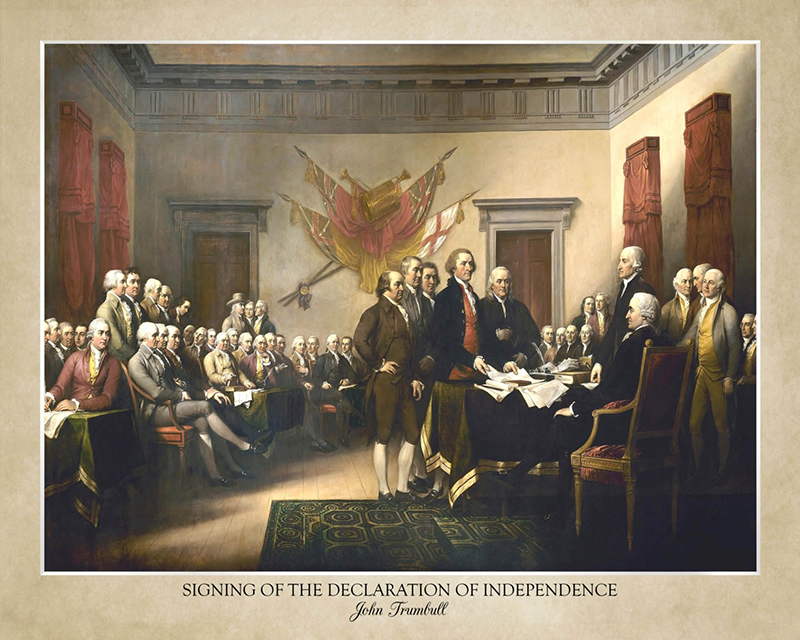
It was not a joyous occasion across the Atlantic in the Assembly Room of the Pennsylvania State House. The King’s view of a number of Freemasons in his colonies was much less warm. At least nine of the fifty‑six signatories of the Declaration of Independence were Freemasons including John Hancock the first to sign. Among the others were William Ellery, Benjamin Franklin, Joseph Hewes, William Hooper, Robert Treat Paine, Richard Stockton, George Walton and William Floyd.
 Their act was anything but celebratory. Co‑signer Benjamin Rush later wrote that they signed “amid a pensive and awful silence,” fully aware they were each committing Treason and signing their own Death Warrants. The occasion was solemn, deliberate and heavy with consequence.
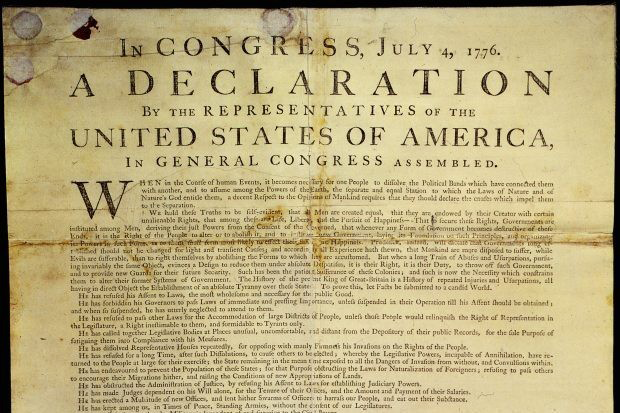
The Declaration itself, 1,320 words in length, did more than proclaim the independence of the thirteen colonies. It set out twenty‑seven grievances against King George III and the British crown, accusing them of obstructing self‑government, imposing legislation without consent, and levying taxes that restricted free trade.
Yet it is the Declaration’s opening statement that endures: “We hold these truths to be self‑evident, that all men are created equal…”, asserting the rights to life, liberty and the pursuit of happiness.
Those ideals, however, were not applied universally. The document contains deeply illiberal language about enslaved Africans and Native Americans, describing the latter as “merciless Indian Savages” and accusing the British crown of encouraging them to fight against the Patriot cause.
In the years that followed, George Washington, who had been initiated in 1752 into Frederick Lodge, Fredericksburg, Virginia, itself named after the late Prince of Wales, half‑brother to the illegitimate Thomas Dunckerley, would take the place of King George III as the new national leader, becoming the first President of the United States of America in 1789.
Pictures:
Top: Commissioned by Congress, John Trumball’s painting of 1818 was placed in the Capitol Rotunda in 1826. The central group shows Jefferson, Adams, Franklin, Sherman, and Livingston presenting the draft to John Hancock. Though the painting does not show the actual signing, just the presentation of the draft, it has become culturally synonymous with “the signing” and is the version that appears on the U.S. $2 bill. Credit: Yale University Art Gallery (colour-enhanced reproduction)
Below: A copy of the Declaration of Independence issued by the Continental Congress, which did not extend freedom to all people. Credit: HUM Images / Universal Images Group via Getty Images